10th grade
Cypress Bay High School
Cypress Bay schedule: AP Computer Science Principles, AP Psychology, AP Seminar, AP English Literature, and Art Collaborative Design Honors.
Standalone FLVS coursework: Precalculus Honors complete with 100.
I’m an aspiring neuroscientist, researcher, and builder, driven by curiosity about the brain. The projects on this site are where that curiosity becomes action: an app for stroke recovery, hardware for sensory overload, a YouTube channel translating real neuroscience research for younger learners. My goal is to make brain science more useful, accessible, and connected to real human needs.
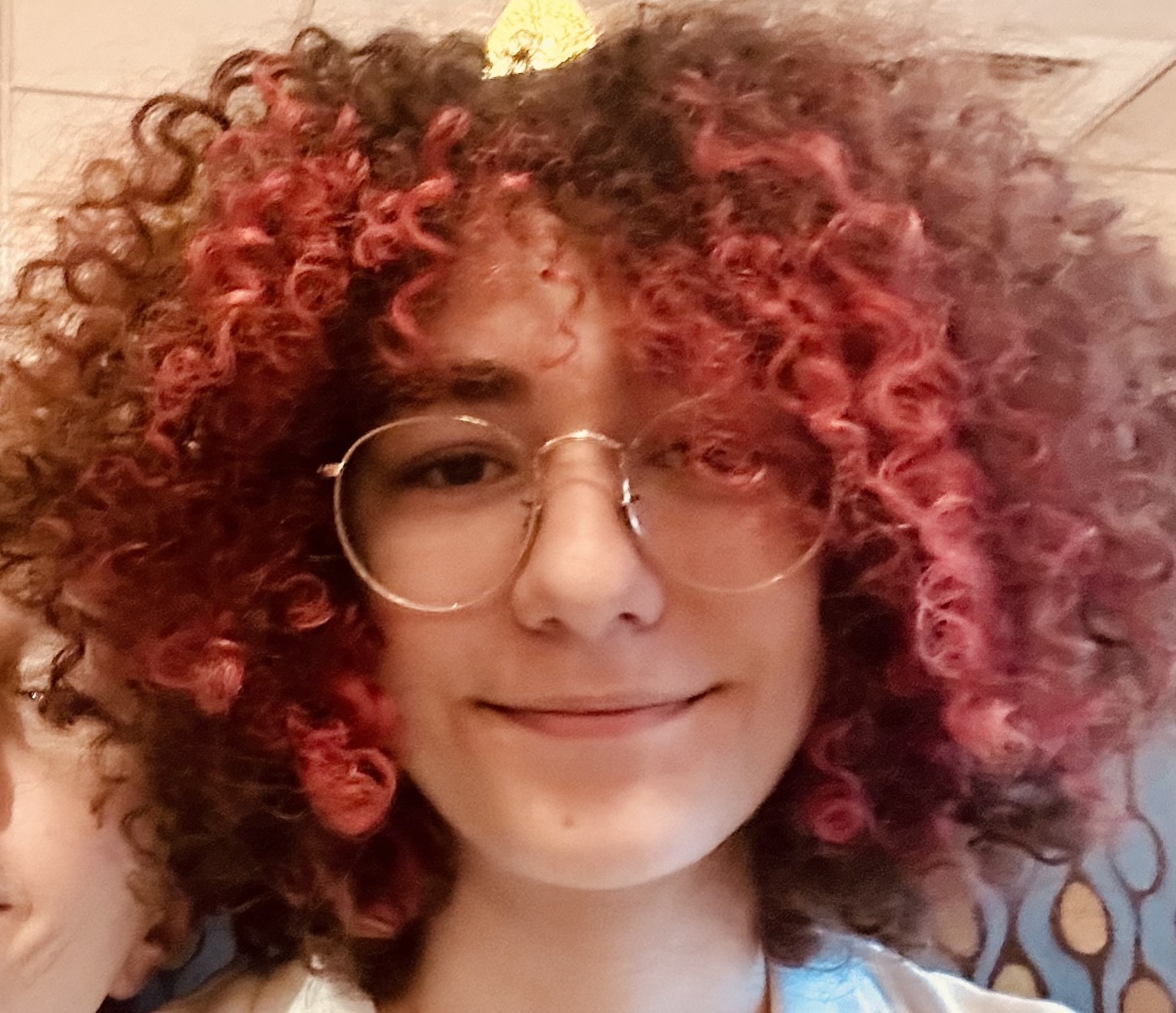
I couldn’t help wondering not just what happens, but why the body and mind bother. Why does a neuron fire at all? Why does a brain, damaged and disoriented, sometimes find its way back?
Chemistry gave me a molecular language: electrons shifting, bonds breaking, energy moving through a system looking for equilibrium. Biology showed me how living systems are built from that same restlessness. Physics gave me the forces underneath both. Every thread I pulled kept pointing me back to the same place. The brain.
Last summer the question stopped being abstract. At Stanford’s CNI-X I worked on A.R.A.I.A., an app concept for people with aphasia. The project framed the problem as a disconnect between what someone wants to say and what they can communicate: intelligence and understanding may remain, while speaking and expression become difficult. That made the design question feel urgent: how can technology support frequent, structured practice without pretending to replace clinicians?
What I keep coming back to is this: the brain’s failing and its coming back are the same plasticity, just running in different directions. I want to study both.
An AI-supported app concept for people rebuilding communication after stroke-related aphasia. The prototype focused on speech and conversation exercises, AI-recommended lessons, speech-recognition feedback, progress tracking, and therapist/caregiver support. It began as my six-person team capstone at Stanford Medicine’s CNI-X 2025, and it’s the project I most want to take further.
Open the project →A school-wearable prototype for earlier sensory-overwhelm cues, private trigger journaling, and a quiet haptic nudge.
My YouTube channel. I take real neuroscience research and turn it into videos for four different age groups. Nothing made up.
Hosted by Stanford Medicine. Keynote on brain-computer interfaces. Attended virtually.
The books and papers I’m reading on my own. Some I’m working through, some I keep going back to.
Why brains differ: the science, what it actually feels like, and groups doing real work for the community.
The numbers, daily protocols with evidence behind them, and who to call if you need someone right now. Focused on younger readers since most popular adult literature doesn’t reach them.
Cypress Bay High School
Cypress Bay schedule: AP Computer Science Principles, AP Psychology, AP Seminar, AP English Literature, and Art Collaborative Design Honors.
Standalone FLVS coursework: Precalculus Honors complete with 100.
Florida Virtual School (FLVS Flex) · honors track
Because my registration came after advanced-course enrollment deadlines had passed, AP options were not available that year. I used the strongest available FLVS honors-track schedule to move quickly on the diploma track and build the rest of my time around neuroscience.
July 7 – July 30, 2026 · virtual program
A neuroscience program built around Journal Club, Career Insights sessions with clinicians and researchers, and select Neurology and Neurosurgery Grand Rounds. I prepared questions for each session and turned several themes into NeuroSense episodes. Program page →
MCB80 series · Prof. David Cox, Harvard
A university-level course on the brain that I worked through alongside high school. It starts with how a single neuron uses electricity to fire, and ends with how whole networks build perception and memory.
Introduction to Cognitive Psychology and Neuropsychology · Cambridge on edX
An online University of Cambridge course on how the brain produces the mind: perception, attention, memory, and language, and what brain injury reveals about each.
Stanford Dept. of Psychiatry & Behavioral Sciences · youngest in the cohort, only rising freshman
A selective, intensive precollegiate summer program: two weeks with Stanford med-school faculty across clinical neuroscience, psychiatry, and psychology, through interactive seminars and a collaborative capstone. Our team capstone, A.R.A.I.A., was presented to faculty, staff, and families. About CNI-X →
HTML & CSS · Python · Device Configuration & Management
Real-world credentials I picked up while doing schoolwork. They’re what let me actually build the prototypes for projects like A.R.A.I.A. and NeuroCalm instead of just sketching them.
I’m always glad to hear from researchers, teachers, students, or anyone working on neuroscience or assistive tech. If something on this site interests you, please write.
perioztekinneuroscience@gmail.com