Aphasia: the words go, but the mind doesn’t
Aphasia is a language disorder, most often caused by stroke. It damages the left-side brain networks that produce or understand speech, but it does not touch intelligence. People with aphasia usually know exactly what they want to say. They just can’t reach the words.
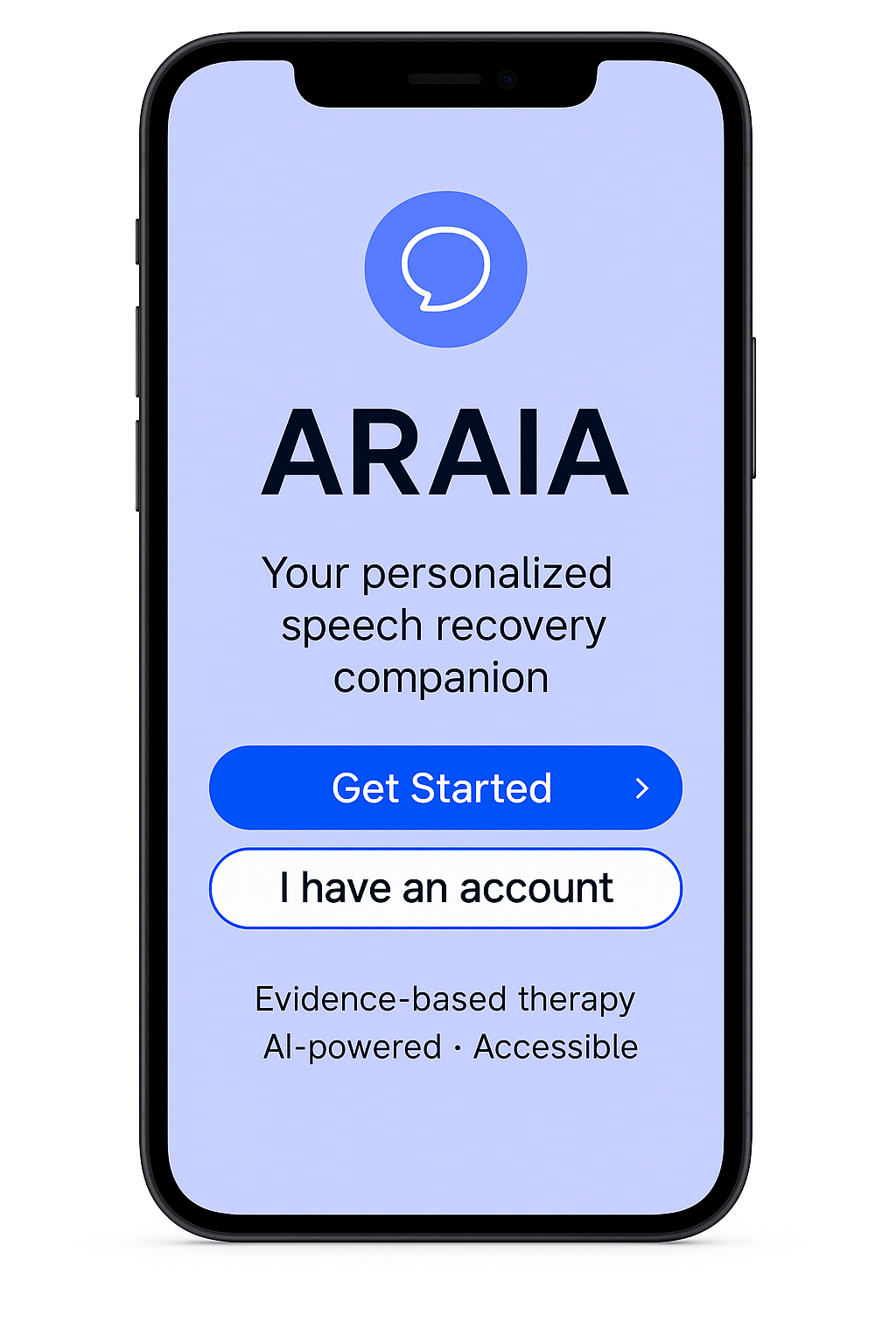
The project identified a practical access problem: people may need frequent speech and conversation exercises in a private, safe setting, but in-person care can be limited by cost, geography, and gaps in healthcare delivery. A.R.A.I.A. was designed as a phone-based support tool for practice between sessions, with therapist involvement built into the concept.
AI-supported speech practice
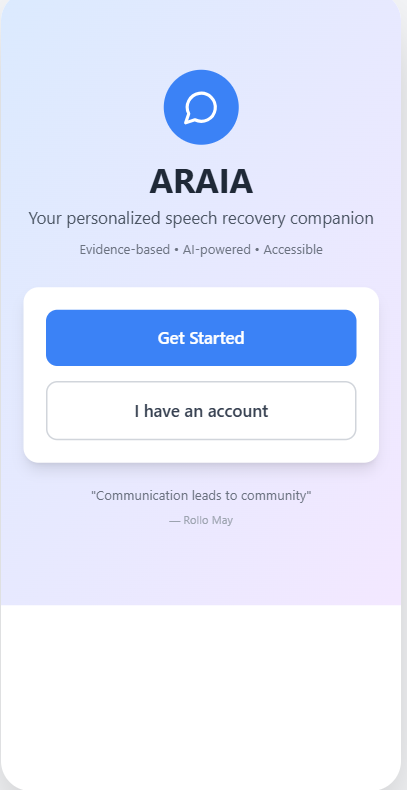
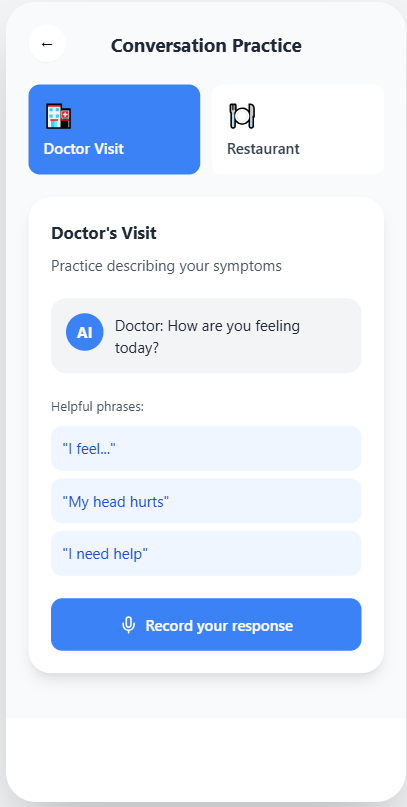
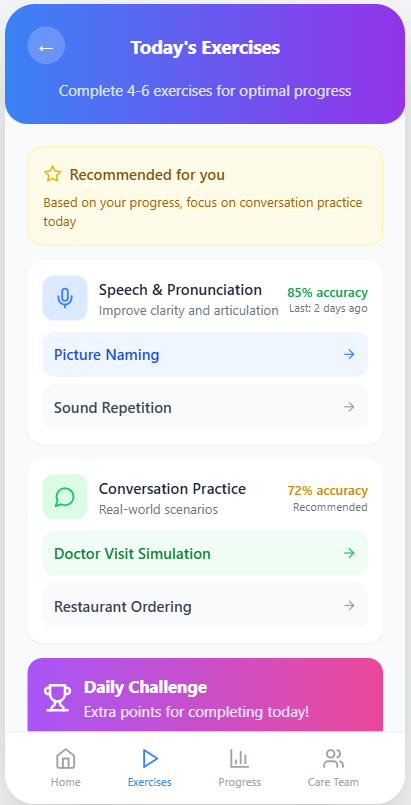
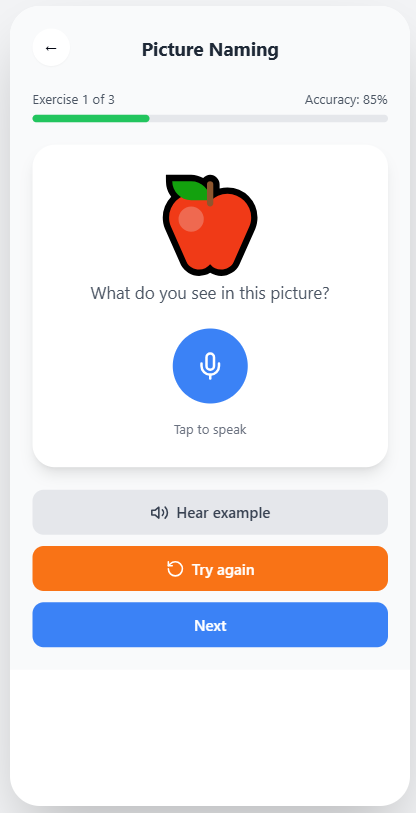
A.R.A.I.A. is built around frequent, adaptive speech and conversation practice for aphasia recovery. The deck describes daily oral-motor and articulation practice, real-time feedback, cognitive games, script and conversation training, reading/writing, and multimodal support.
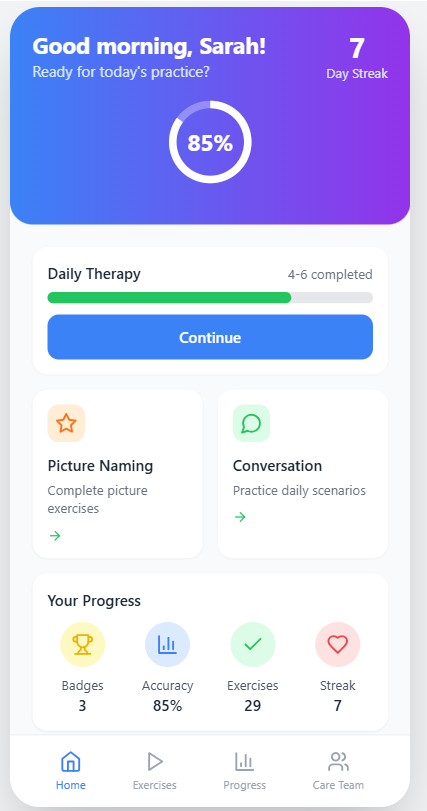
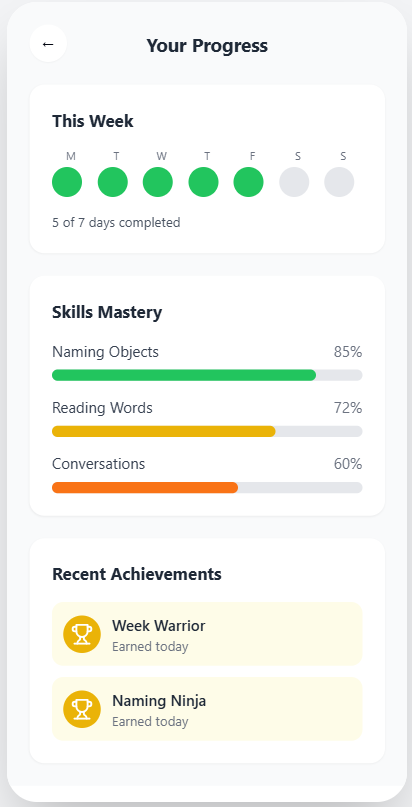
The app concept has five practical pieces: AI-recommended lessons, picture naming and other structured exercises, conversation practice with scenario-based simulations, speech-recognition feedback on pronunciation and fluency, and progress tracking for patients, caregivers, and therapists. The first version was explicitly limited by the need for better training data, bias reduction, clinical review, and real-user feedback.
Designed for someone whose patience is already at its limit
Big targets. Calm colors. One thing per screen. Voice input on equal footing with typing. Progress visible without nagging.
The capstone presentation
Presented to Stanford CNI-X 2025 faculty, staff, and families in the final demo. The deck walks through the clinical problem, the app modules, the AI architecture, and the demo.
A six-person capstone
A.R.A.I.A. was built by a team of six students at CNI-X, Stanford Medicine’s selective, application-based summer immersion in clinical neuroscience, run by the Department of Psychiatry & Behavioral Sciences. We split the work evenly across research, fact-checking the clinical claims, design, and the final presentation. I was the youngest in the cohort, the only rising freshman, and the rest of the team was older. Pulling my own weight meant being careful with the science: every claim I wrote on the slides could be traced back to a paper I had read and verified myself.
From prototype to clinic
Right now A.R.A.I.A. is a polished concept and a working prototype, and it is mine to keep building past the two weeks it started in. To put it in front of real patients, the next steps I want to take are:
- Train the ML model on usable datasets and existing therapy-exercise examples, with bias checks built in from the start.
- Pilot testing and feedback from real users before any clinical claim goes beyond the prototype stage.
- Clinical review with licensed therapists, linguistic experts, neurologists, and psychologists before patient-facing use.
- Broader language support after the English-only first version, because speech recognition can reproduce language bias if it is not tested carefully.
If you work in stroke rehab, speech-language pathology, or BCI research and any of this is interesting to you, please reach out: perioztekinneuroscience@gmail.com.